
Estimated read time: 11 minutes
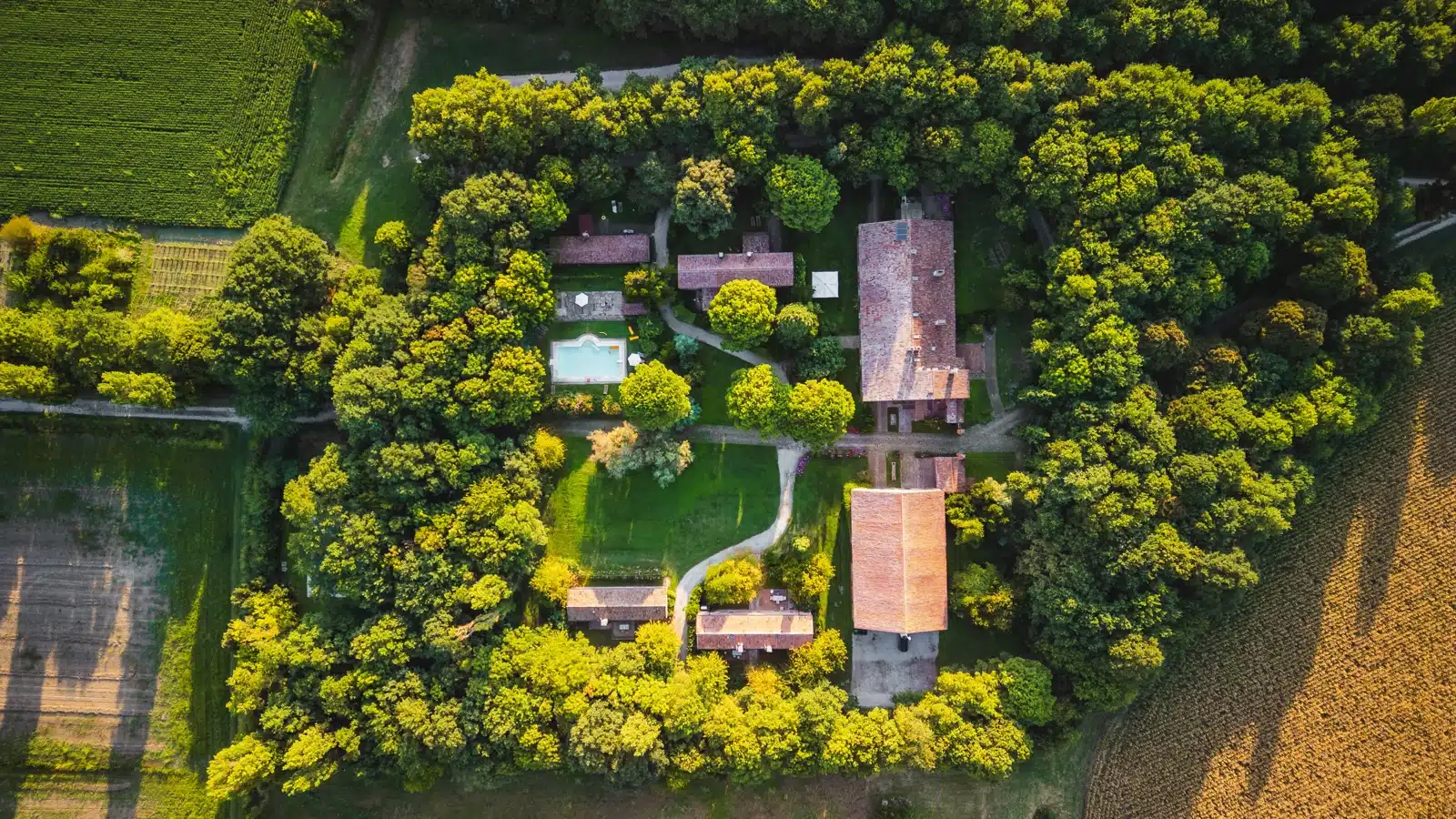
I recently worked with a client who owns a large Texas coastal property with more buildings than most homeowners ever have to think about at once. A main house, a guest house, a barn, a workshop, and a scattering of outbuildings, each with its own history and its own use. The property has one address. It does not have one insurance question.
The client had heard, from more than one source, that every separate building needs its own windstorm policy. Someone else had told them the opposite: that only the buildings people actually sleep in count. Neither answer held up once we started asking what each building actually was.
That is really the whole article. An owner with several structures may hear that every building needs its own TWIA policy, or that only living quarters do. The real question starts one step earlier: what is each building, and how is it being used right now?
Start with what TWIA’s dwelling policy already covers
A TWIA Dwelling Policy is built around Coverage A, the dwelling itself. But Coverage A does not stop at the walls of the main house. It also extends, in a limited way, to what the policy calls “other structures”: buildings at the same described location that are detached from the dwelling, set apart by clear space, or connected to it only by something like a fence or a utility line.
That is meaningful. A detached garage, a shed, or a small guest cottage can potentially fall inside the dwelling policy without any separate policy at all, as long as the actual terms, exclusions, and limits support it.
The limit is the part people miss. Coverage for all other structures combined, on the standard unendorsed dwelling policy, tops out at 10 percent of Coverage A. That is not extra money layered on top of the dwelling limit. TWIA’s own policy language is explicit that this coverage is not additional insurance and does not increase Coverage A. If a property has several covered other structures, they share that same 10 percent aggregate limit rather than each receiving 10 percent.
The standard mechanism also excludes any other structure used for business purposes. That single exclusion turns out to matter more than almost anything else in this article, and we will come back to it more than once.
What TWIA-419 actually changes
TWIA offers an endorsement, TWIA-419, that addresses the 10 percent problem directly. Once it is attached to a policy, it replaces the standard other-structures provisions with a separate aggregate limit shown on the declarations page. Unlike the built-in 10 percent, this endorsed amount is additional insurance. It sits on top of Coverage A rather than eating into it.
Based on TWIA’s filing materials, the endorsement was built to offer that additional limit in increments, running from a minimum of 10 percent up through a maximum of 50 percent of Coverage A. Which amount is actually available, and whether the endorsement is even offered on a particular account, is something to confirm on the real quote or policy rather than assume from a percentage read somewhere online.
A few things stay the same even with TWIA-419 attached. The endorsement does not change the deductible amount. The deductible shown on the declarations applies to covered Coverage A losses and is inclusive of losses covered by TWIA-419. The business-use exclusion also carries over. TWIA-419 changes the available other-structures limit. It does not turn a structure used for business into covered property.
When a building becomes its own risk item instead
Not every structure is meant to live inside the dwelling policy’s other-structures provision, even with TWIA-419 attached. TWIA’s own materials describe a second path: writing a building as its own risk item, on its own separate policy.
This is where the “how many buildings do I have” framing breaks down. TWIA’s Instructions and Guidelines Manual is clear that a residential policy cannot cover multiple risk items or multiple property locations at once. Each risk item, and each location, needs its own policy. When TWIA classifies a building as a separate residential risk item, current manual procedure calls for a separate policy rather than treating it as part of the main dwelling’s aggregate other-structures limit.
So the useful question is not how many buildings sit on the property. It is which buildings qualify as other structures under the main dwelling policy, which ones need to be written as their own risk item, and which belong under a farm, ranch, or commercial classification instead. That sorting happens building by building, and TWIA’s underwriting is the party that ultimately makes the call.
Detached garages and ordinary outbuildings
A detached garage, storage shed, or similar personal-use outbuilding is usually the easiest case. TWIA’s manual definitions include private garages among the structures associated with a dwelling, and the dwelling policy’s other-structures language is built for exactly this kind of building. That does not make the coverage automatic. Value, condition, and how the building is actually used still need to be confirmed, and its share of that 10 percent, or the TWIA-419 limit if the endorsement is attached, still needs to reflect what the building would actually cost to rebuild.
Guest houses, casitas, and second dwellings
This is where the “does it have a bedroom” shortcut falls apart. TWIA’s manual defines “dwelling,” for classification purposes, broadly enough to include garage apartments, duplex units, seasonal dwellings, and private camp houses, among other occupied structures. A guest house or casita can fall inside that dwelling definition. That does not automatically mean it needs its own policy, and it does not automatically mean it is safely covered as an other structure either.
What actually decides the outcome has more to do with occupancy and function than with square footage. Is it used occasionally by family and guests, or does someone live there full time? Is it rented out? Does TWIA’s underwriting consider it a genuinely separate residential risk item, distinct from the main house? None of the public TWIA materials resolve every version of this question with one rule, which means a guest house should be treated as a structure that needs its own classification conversation, not one that gets an answer assigned in advance.
A second dwelling, meaning a fully independent home on the same property, tends to sit further along that spectrum than a casual guest cottage. A separately occupied residential building is a stronger candidate for its own risk item and its own policy. Whether that is actually how it needs to be written is still a question for TWIA, not an assumption to make from the driveway.
Barns, workshops, and equipment buildings
A barn is not one thing, insurance-wise. TWIA’s manual lists private barns among the structures that can be associated with a dwelling, which sounds simple until you notice the same manual also treats farm and ranch operations, including buildings on their premises, as commercial risk. The determining fact is not the word “barn.” It is what happens inside it.
None of this turns on how much land the property has. TWIA defines a farm or ranch operation by actual activity, things like raising livestock, growing crops, or grassland returned to pasture, not by acreage. A large property is not automatically a commercial risk, and a small one is not automatically exempt from that question.
A barn that exists purely in connection with the residence, storing personal vehicles or equipment with no farming or business activity attached, sits much closer to an ordinary other structure. A barn that supports livestock, crops, boarding, or another operation tied to a working farm or ranch is a different matter. TWIA’s classification manual treats buildings on the premises of a farm or ranch operation, including its dwelling, as commercial risks. If the property uses a Farm and Ranch Dwelling Policy through TWIA-410, private structures used in connection with the dwelling share a 10 percent, non-additional limit. TWIA-410 excludes structures used for farm, ranch, or business purposes from that provision and separately lists farm buildings, equipment, machinery, crops, and livestock as property not covered by the converted dwelling policy.
A workshop raises the same question in a different shape. A shop used to maintain personal vehicles and property is a different case from a shop where a trade is conducted, customers show up, or employees work. Nobody can answer that from the outside. The owner has to say, honestly, what actually happens in the building.
Caretaker quarters, rentals, and mixed-use buildings
Employee or caretaker quarters appear in TWIA’s own dwelling definition, so this kind of structure is recognized within the residential framework. Recognition is not the same as automatic treatment. Whether it sits inside the other-structures provision or needs its own risk item still depends on occupancy and use, the same as a guest house does.
Two categories deserve particular honesty. A structure that is actually rented out, whether to a long-term tenant or short-term guests, is generating income, and that fact needs to be disclosed rather than smoothed over. A building that serves a personal purpose but also supports a business or farm activity presents a mixed-use question. Because the policy excludes other structures used for business purposes, the complete use should be disclosed to TWIA rather than divided into a preferred description. Mixed or unclear use calls for a direct underwriting conversation rather than a guess.
What a WPI certificate proves, and what it does not
Somewhere in this process, someone is going to mention a WPI-8 or WPI-8-E. These are windstorm inspection certificates. Required certification, subject to limited exceptions and eligibility programs, is part of TWIA’s eligibility framework.
Here is the distinction worth holding onto: a certificate documents that a structure, or a specific improvement to it, meets the applicable windstorm building code. It is a compliance record. It does not, by itself, establish that the structure is covered, what its limit is, whether it counts as an other structure or a separate risk item, or how it should be classified. Depending on when a structure was built or last modified, it might carry a current WPI-8, an older certificate from a past certification period, or a documented exception. A property with several buildings, additions, and renovations over the years can easily end up with a mix of all three, and that needs sorting out structure by structure rather than assumed from the age of the property.
TWIA is one layer of the property, not the whole program
TWIA covers wind and hail. It does not cover flood, and it is not a substitute for the homeowners, farm and ranch, or commercial property policies that may address other causes of loss and exposures. For broader context on the wind and hail layer, see Gilded Oak’s Texas wind and hail coverage guide.
That means the honest way to think about a complex property is as a set of coordinated policies, each answering its own question, rather than one document expected to answer all of them. TWIA decides its own eligibility, form, and covered property. The companion carrier decides its own, under its own contract, and there is no guarantee the two treat a given building the same way. If flood exposure is part of the picture, that is a separate coverage question worth reviewing on its own, alongside the broader Texas home insurance side of the property.
What to gather before you talk to TWIA about a multi-structure property
The property owners who get through this process with the fewest surprises are the ones who show up with real facts about every building, not just the main house. For each structure on the property, it helps to know:
- What it is used for today, and whether that is expected to change
- Who occupies or uses it: family, a caretaker or employee, a tenant, customers, or no one regularly
- Whether it has sleeping quarters, a kitchen, or a bathroom
- Whether any farm, ranch, or business activity happens there
- What it would cost to rebuild, separate from land value
- Its windstorm certification status, including a current WPI-8, WPI-8-E, or an older certificate
- How it currently appears, or does not appear, on the existing TWIA policy or any other policy
That list is not a form to fill out for its own sake. It is what lets an agent, and ultimately TWIA’s underwriting, actually sort the buildings correctly instead of guessing from a driveway tour. On a property with several structures, a labeled site diagram alongside that information tends to save real time later.
A property like this is worth reviewing building by building
None of this is meant to turn a property owner into their own underwriter. It is meant to explain why “how many buildings do I have” is the wrong first question, and “what is each one, and how is it used” is the right one.
If a property has more than one structure worth insuring, a coverage review that goes building by building, rather than treating the property as a single line item, is usually time well spent.
Have multiple structures on a Texas coastal property?
We can review the property building by building and help identify what needs direct TWIA or carrier confirmation before coverage is placed.
Request a Property Coverage ReviewButton: Request a Property Coverage Review
Frequently asked questions
Does every detached building need its own TWIA policy?
No. Some detached structures can be covered within the main dwelling policy’s other-structures provision, or under TWIA-419 if that endorsement applies. Others genuinely need to be written as their own risk item. Which path applies depends on what the building is and how it is used, not simply on the fact that it is a separate building.
Does a guest house need its own TWIA policy?
Not automatically, and not never. TWIA’s own definitions recognize occupied structures like guest houses within its dwelling framework, but that alone does not resolve whether a given guest house belongs inside the main policy, under an increased-limit endorsement, or as its own risk item. Occupancy, use, and TWIA’s underwriting classification decide that.
Does TWIA cover barns and workshops?
TWIA may cover a private-use barn or workshop, but treatment depends on the building’s actual use and classification. A structure connected to personal use of the residence is different from one that supports a working farm, ranch, or business operation. TWIA classifies buildings on a farm or ranch operation as commercial risks, and both the standard dwelling coverage and TWIA-419 exclude other structures used for business purposes.
What does TWIA-419 change?
It replaces the standard 10 percent other-structures provision with a separate, additional aggregate limit shown on the declarations page. It does not change the deductible amount, and it does not cover other structures used for business purposes.
Does a WPI-8 prove that a building is covered?
No. A WPI-8 or WPI-8-E documents that a structure meets applicable windstorm building-code requirements. It is a certification and eligibility record, not proof of coverage, a stated limit, or a classification decision.
Need Help Finding the Right Coverage?
Whether you’re reviewing an existing policy or comparing new options, we’re happy to help you understand your choices and find coverage that fits your situation.
Get a Quote