
Quick Summary
- Roof age is one of the biggest factors Texas insurers use to price, approve, or restrict a homeowners policy.
- As a roof gets older, insurance companies often assume the chance of a roof replacement claim gets higher.
- Replacing an aging roof can improve your rating and may unlock a “new roof” credit or discount.
- Class 3 or Class 4 impact resistant shingles can qualify for additional discounts with many Texas insurers.
- Unrepaired damage and poor documentation can create claim headaches later, including disputes about whether damage is old or new.
“A full FAQ section is included at the end of this article for quick answers.”
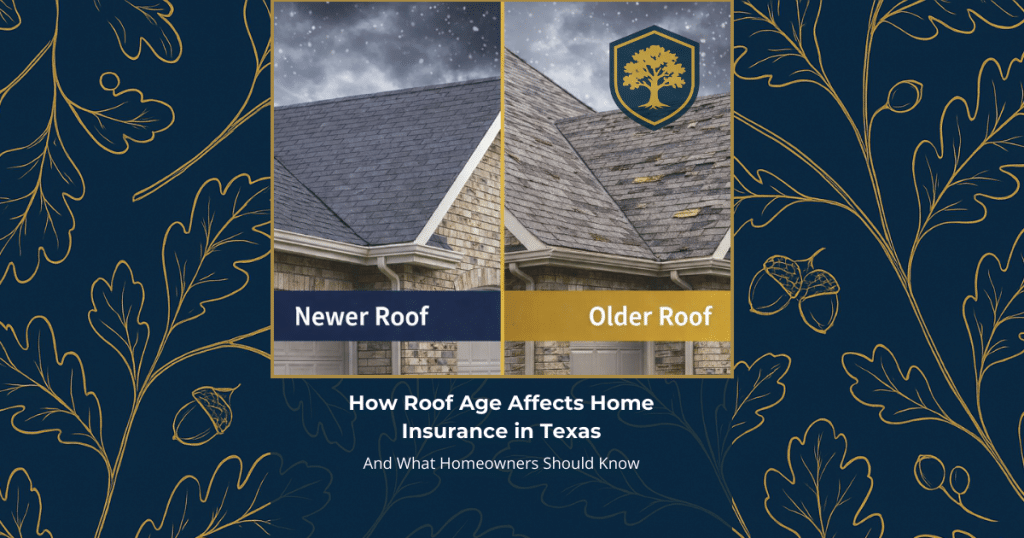
Texas homeowners feel this fast: two houses can look identical, but if one roof is 6 years old and the other is 16, the premium and coverage terms can be very different. This guide breaks down how roof age affects home insurance in Texas, what insurers are really trying to manage, and what you can do to protect both your coverage and your budget.
How Roof Age Affects Home Insurance in Texas
Roof age affects home insurance in Texas because insurers treat an older roof as a higher probability of a near-term claim.
Even if your roof “looks fine,” many carriers rate or underwrite based on age brackets and expected remaining life. The practical result is usually one (or more) of the following:
- Higher premium as the roof ages
- Limited roof coverage terms (commonly ACV instead of RCV on the roof)
- Higher wind and hail deductibles in hail-prone areas
- Underwriting requests for proof of condition or repairs
- Non-renewal risk if the roof is beyond a carrier’s guidelines
This is not just about storms. It is about predictability. In Texas, hail and wind patterns make roof claims more common than in many other states, so roof age becomes a core variable in how a company prices risk.
Why Older Roofs Increase Home Insurance Premiums
Older roofs increase home insurance premiums because insurers see them as closer to a roof replacement claim.
That does not mean an older roof will automatically leak tomorrow. It means the insurer is pricing the likelihood that a storm event, even a moderate one, turns into a paid claim sooner. From the carrier’s viewpoint, a 20-year-old roof often requires fewer hail impacts to become a “replace” decision than a newer roof.
Here is the plain-English logic many companies use:
- Older roof = more wear, more brittleness, less resistance
- Lower resistance = more damage likelihood in wind and hail
- More damage likelihood = more claims frequency and severity
- More claims = higher premium and tighter guidelines
This is also why homeowners sometimes see big premium swings after a roof crosses a certain age threshold, even if nothing visibly changed.
How Texas Insurance Companies Rate Roof Age
Texas insurance companies rate roof age using age-based underwriting and pricing rules that can vary by carrier and by county.
Some carriers rate roof age primarily for wind and hail exposure, while others factor roof age into the overall home score and eligibility. Many also care about roof type (composition shingle, metal, tile) and the home’s specific storm history.
Common rating inputs include:
- Roof install year (not just the home build year)
- Roof material and impact rating
- Prior claims history (property and sometimes area trends)
- ZIP code wind and hail loss history
- Proof of replacement or inspection documentation
Texas Insight: In North Texas, roof age tends to matter even more because hail frequency and roof claim volume can be higher than statewide averages. That pushes more carriers toward stricter roof guidelines, especially on older composition shingles.
What Happens When a Roof Is Near Replacement Age
A roof near replacement age can trigger stricter underwriting, coverage limitations, or even policy non-renewal depending on the insurer.
The most common “near replacement age” pressure points are:
- The carrier requires a roof inspection
- The carrier excludes certain roof-related losses until repairs are completed
- The carrier offers coverage but restricts the roof settlement method
- The carrier declines new business until the roof is replaced
This is where many homeowners get surprised. They assume “I have insurance, so the roof is covered,” but the policy might treat the roof differently than the rest of the home. That is why understanding ACV vs RCV roof Texas rules matters.
Quick Tip
If you replaced your roof but your premium did not change, confirm your insurer has the correct install date and documentation. A missing roof update is one of the easiest ways to miss out on a roof replacement insurance Texas discount opportunity.
Roof Replacement and Home Insurance Discounts in Texas
Roof replacement and home insurance discounts in Texas are often linked to roof age credits, material type, and impact resistance verification.
A new roof can improve your “rating picture” because it resets the roof age factor and reduces the insurer’s expected claim risk. Many carriers offer a new roof credit or treat the home more favorably during underwriting.
New Roof Credit and Favorable Insurance Rating
A new roof can improve eligibility and lower premium because it reduces near-term claim probability.
In practical terms, you may see:
- Better base premium than an aging roof
- More carriers willing to quote the home
- More favorable roof settlement options
- Fewer underwriting questions at renewal
This is one reason homeowners sometimes replace a roof a bit earlier than they wanted, especially when they are facing higher premiums or limited options.
Class 3 and Class 4 Impact Resistant Shingle Discounts
Class 3 and Class 4 impact resistant shingles can qualify for additional discounts with many Texas insurers.
Savings vary by carrier, location, and verification requirements, but impact resistant credits can be meaningful. Some homeowners see discounts that feel substantial, especially when combined with the new roof credit.
What usually matters to the insurer:
- Shingle impact rating (Class 3 or Class 4)
- Proof of product and installation (invoice, certificate, or inspection record)
- Whether the discount is available in your specific territory
Important: Avoid assuming a discount will automatically apply. Many carriers require documentation and a specific form of verification.
How Existing Roof Damage Can Affect Future Insurance Claims
Existing roof damage can affect future insurance claims if the carrier believes the damage was not addressed within a reasonable timeframe.
This is one of the most overlooked issues. If a roof has visible damage and it is ignored for a long period, you can run into disputes later about whether new damage is actually new. Even when the homeowner is acting in good faith, claim outcomes can become harder if the roof was already compromised.
Common problems include:
- Claim adjuster identifies “prior damage” or “wear and tear” conditions
- The insurer disputes whether the storm event caused the current condition
- Coverage may be limited if the roof was not maintained in reasonable condition
- The carrier may require repairs as a condition of renewal
This does not mean you need a perfect roof at all times. It means you should avoid letting obvious issues linger.
Manufacturer Defects vs Insurance Covered Roof Damage
Manufacturer defects are typically handled through warranty, while insurance covers sudden, accidental damage from covered events.
This distinction matters because homeowners sometimes file a claim for something that looks like storm damage but is actually:
- A manufacturing defect
- Improper installation
- Poor workmanship
- Long-term deterioration
Home insurance generally does not replace roofs due to defect or workmanship issues. If the issue is product-related, the correct path is often the manufacturer’s warranty process, sometimes coordinated through the installer.
A good rule of thumb:
- Storm-created damage is an insurance conversation.
- Product failure or installation failure is usually a warranty or contractor conversation.
Why Documenting Roof Condition After Texas Storms Matters
Documenting roof condition after storms helps protect your future claim by showing what the roof looked like before a later loss.
Texas weather is chaotic. You can have multiple hail events in the same season. Later, if you file a claim and the insurer thinks the damage may be older, good documentation can help reduce doubt.
Simple documentation habits:
- Take date-stamped photos after major storms
- Photograph wide shots and close-ups (vents, ridges, slopes, soft metals)
- Keep contractor inspection notes if you have them
- Save invoices for repairs, even small ones
This can be especially helpful when damage is subtle or when it is hard to tell the age of certain impacts.
Common Misconceptions About Roof Age and Home Insurance
Roof age misconceptions can lead to denied claims, missed discounts, or coverage gaps.
Here are the ones I see most often in Texas:
- “If my roof is old, insurance has to replace it after a storm.”
Insurance covers covered damage, not age or expected replacement. - “If I pay more premium, my roof is automatically fully covered.”
Premium does not guarantee RCV on the roof, and terms vary by policy. - “If there was hail in my area, my roof claim should be approved.”
The carrier evaluates whether your roof has covered damage, not whether hail occurred nearby. - “A Class 4 roof always gets a discount.”
Many carriers offer credits, but proof and eligibility rules vary. - “If I wait, the next storm will take care of it.”
Waiting can blur the line between old and new damage and complicate future claims.
What Texas Homeowners Should Do If Their Roof Is Aging
Texas homeowners with aging roofs should focus on documentation, maintenance, and confirming how the roof would be paid under their current policy.
Here is a practical checklist that keeps things simple:
- Confirm roof age on file.
Make sure your insurer has the correct install year. - Ask how roof claims are settled.
Specifically ask whether the roof is ACV vs RCV roof Texas on your policy. - Address obvious damage quickly.
Small repairs and documentation can prevent bigger disputes later. - If replacement is coming soon, consider impact resistance.
If you replace, explore Class 3 or Class 4 impact resistant shingles. - Use warranty channels for defects.
If it is product or workmanship, do not force it into an insurance claim.
Non-salesy CTA
If you are unsure whether your roof is being treated as ACV or RCV, or you want to confirm your roof age is correctly listed, a quick policy check can usually clarify it in a few minutes. The goal is not to overcomplicate it, just to make sure you are not surprised later.
FAQ: How Roof Age Affects Home Insurance in Texas
These answers are general guidance. Discounts and coverage vary by insurer, location, and policy details.
How old can a roof be before home insurance gets expensive in Texas?
Premium often increases as a roof moves into older age brackets because the insurer expects a higher likelihood of wind and hail damage turning into a roof replacement claim.
Does roof age affect whether a Texas insurer will renew my homeowners policy?
Yes, some insurers tighten guidelines as a roof ages, and renewals can be affected if inspections show the roof is near end of life or has unrepaired damage.
Can a new roof lower my home insurance premium in Texas?
Often, yes. A new roof can improve rating factors, unlock a new roof credit, and increase the number of insurers willing to offer favorable terms, depending on location and roof type.
Do Class 3 or Class 4 impact resistant shingles qualify for discounts in Texas?
Many insurers offer credits for Class 3 or Class 4 impact resistant shingles in Texas, but savings and proof requirements vary by company and territory.
How can unrepaired roof damage affect a future hail claim in Texas?
If prior damage was not repaired within a reasonable timeframe, a future claim can become harder because the insurer may question whether the current condition is new storm damage or older wear and tear.
Is a roof leak always covered by home insurance in Texas?
No. Coverage typically depends on whether the leak was caused by a covered, sudden event versus long-term deterioration, a maintenance issue, or a defect or poor workmanship.
How should I document my roof after a Texas hail storm?
Take date-stamped photos of multiple roof slopes, close-ups of soft metals and vents, and any visible impacts, and keep contractor notes or invoices if you schedule an inspection.
Article Summary
Roof age home insurance Texas pricing is driven by how insurers estimate near-term roof claim risk. A newer roof can improve eligibility and unlock discounts, while older roofs may face higher premiums, tighter underwriting, and roof settlement limits like ACV vs RCV roof Texas. Prompt repairs, warranty awareness, and storm documentation reduce claim disputes and protect coverage.

Luke Faulkner is a Texas-licensed insurance advisor and the founder of Gilded Oak Insurance. He helps Texas drivers and homeowners make confident coverage decisions through clear, practical guidance — without pressure or fear-based selling.
Learn more about our mission and approach on the Gilded Oak Insurance About page .
Related Articles
- Home Insurance Guide
- Texas Home Insurance Deductible Explained: AOP vs Wind & Hail
- ACV vs RCV Roof Coverage in Texas: What Homeowners Actually Get Paid
- Does Home Insurance Cover Roof Leaks in Texas?
⚜️ Stay Connected with Gilded Oak
Join us on social for insurance savings tips, light-hearted entertainment, and everyday insights that make coverage easier (and a little more fun) to understand.
Request a Quote