

Quick Summary
- Explains what texas home insurance exclusions actually are
- Highlights common losses homeowners assume are covered but aren’t
- Shows where endorsements or separate policies may be needed
A full FAQ section is included at the end of this article for quick answers.
Home insurance is designed to protect you from major financial losses — but it doesn’t cover everything. One of the biggest sources of frustration we see from Texas homeowners comes down to coverage assumptions that don’t match how policies actually work.
This guide breaks down what isn’t covered by home insurance in Texas, why these exclusions exist, and where homeowners often need to take extra steps to avoid surprise claim denials.
What Are Texas Home Insurance Exclusions?
Texas home insurance exclusions are specific situations, causes of loss, or types of damage that your homeowners policy does not cover. These exclusions are not mistakes or loopholes — they are intentional limitations built into the policy.
Most homeowners policies are designed to cover sudden and accidental losses, not ongoing problems, poor maintenance, or predictable wear.
Understanding exclusions ahead of time gives you the opportunity to:
- Adjust expectations
- Add endorsements where available
- Purchase separate policies when necessary
- Avoid costly surprises during a claim
Why Homeowners Are Often Surprised by Exclusions
Many homeowners assume that if damage happens inside their home, it should automatically be covered. In reality, how the damage happened matters just as much as what was damaged.
Common reasons exclusions catch people off guard include:
- Confusing insurance with a home warranty
- Not realizing endorsements are optional
- Assuming all water damage is treated the same
- Not reviewing exclusions after switching companies
If you’re buying a home, it’s worth reviewing exclusions before closing — see our guide to homeowners insurance before closing in Texas.
Most Overlooked Texas Home Insurance Exclusions
Water Backup and Sump Pump Failures
Water backing up through a drain is one of the most commonly misunderstood coverage gaps. If a city sewer system backs up or a treatment plant issue causes water to flow back into the home, the damage is often not covered unless a water backup endorsement has been added.
This applies even if:
- The home is connected to city sewer
- The backup was outside your control
- The damage occurred suddenly
Homes with sump pumps face a similar issue. Sump pump overflow or failure is frequently excluded unless endorsed.
Texas Insight:
Depending on the carrier, water backup coverage may range from as little as $5,000 to much higher limits — sometimes up to Coverage A — but it must be added in advance.
Wear and Tear vs. Sudden and Accidental Loss
One of the most important distinctions in homeowners insurance is the difference between wear and tear and a covered loss. Insurance is not designed to replace items that fail due to age or deterioration.
Examples typically excluded:
- Aging plumbing that finally fails
- Roof leaks caused by worn shingles
- Appliances breaking down over time
This is one of the biggest differences between home insurance and a home warranty.
Improper Workmanship or Faulty Repairs
Damage caused by improper workmanship is commonly excluded. If a repair or renovation fails because it was done incorrectly, insurance may not cover the resulting damage.
This can apply to:
- Plumbing repairs
- Roof replacements or patch work
- Electrical installations
- Remodeling projects
Quick Tip:
Always use reputable contractors and keep documentation. Insurance is not a substitute for contractor warranties.
Foundation Movement, Settling, and Cracking
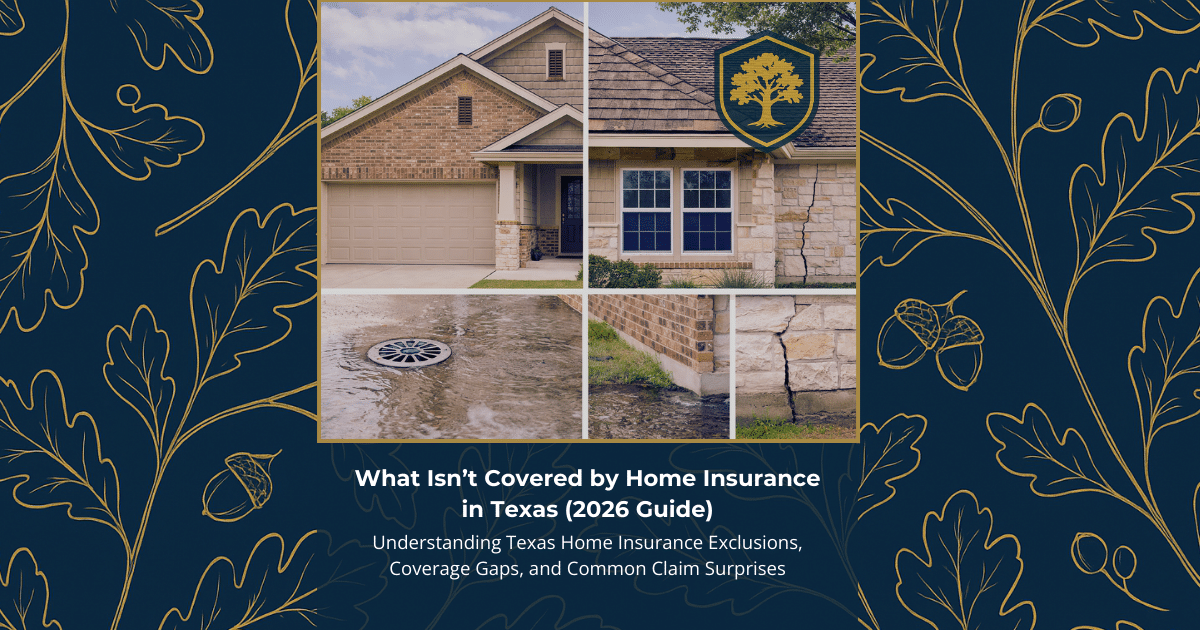
Foundation movement is a major concern in Texas due to soil conditions. Many homeowners policies exclude foundation cracking, settling, shifting, or movement unless a specific endorsement applies.
In some cases, foundation damage tied to moisture or steam discharge from appliances may still fall into this exclusion category.
Flood Damage From Rain or Weather Events
Standard homeowners insurance does not cover flooding caused by rising water. This includes:
- Heavy rainfall accumulation
- Flash flooding
- Surface water entering the home
- Drainage overflow
Flood damage typically requires a separate flood insurance policy, even when the water comes from rain.
Pest, Vermin, or Rodent Damage
Damage caused by pests or vermin over time is generally excluded. This includes:
- Termite damage
- Rodents chewing wiring
- Nesting damage
These losses are considered preventable and maintenance-related under most policies.
Mold (Often Limited or Excluded)
Mold coverage varies, but many Texas policies exclude mold or cap coverage at a low sublimit. When mold is covered, it usually must result directly from a covered sudden event, such as a burst pipe.
Long-term moisture issues are a common reason mold claims are denied.
Slow or Hidden Leaks
Slow leaks are another frequent source of denied claims. Even when hidden behind walls or under slabs, leaks that develop over time are often excluded.
Examples include:
- Under-sink drips
- Pinhole pipe leaks
- Long-term slab leaks
Roof Damage From Age or Deterioration
Roof claims often involve a mix of covered and excluded causes. If a roof is already worn or deteriorated, insurers may apply wear-and-tear exclusions even after a storm.
Some Texas policies also include cosmetic damage exclusions, especially for metal roofs, meaning dents that don’t affect function may not be covered.
Tree Root Damage to Plumbing or Foundation
Tree roots growing into pipes or contributing to foundation movement are typically considered gradual damage and are often excluded, even if repairs are expensive.
Vacancy-Related Losses
Coverage can be reduced or excluded if a home is vacant for a certain period, often 30–60 days. Water damage and vandalism are common exclusions during vacancy.
Power Failure Originating Off-Premises
If a power outage starts off your property, coverage for resulting losses like food spoilage may be limited unless specific coverage applies.
Ordinance or Law (Code Upgrade Costs)
When repairing older homes, local building codes may require upgrades. Ordinance-or-law coverage helps pay for these updates, but limits vary and may need to be increased.
Business Use of the Home
Running a business from home can create coverage gaps. Business equipment, inventory, and liability may not be fully covered under a standard homeowners policy.
High-Value Personal Property Limits
Many policies have low built-in limits for items like jewelry, firearms, cash, and collectibles. Scheduling these items is often required for meaningful coverage.
A Simple Way to Avoid Coverage Surprises
Most claim denials don’t happen because homeowners did something wrong — they happen because no one explained the exclusions clearly.
Before your next renewal, it’s worth reviewing:
- Your policy exclusions page
- Any endorsements you do or don’t have
- Where your biggest financial risks actually are
A short review now can prevent a much bigger issue later. Contact us here.
FAQ: Texas Home Insurance Exclusions
These answers are general guidance. Always check your specific policy form and endorsements for exact wording.
What are the most common texas home insurance exclusions?
The most common texas home insurance exclusions usually involve losses that are gradual or require special endorsements. Examples often include:
- Wear and tear or deterioration
- Slow leaks or long-term water damage
- Foundation movement/settling
- Flooding from rising water or heavy rain events
- Pest or vermin damage over time
- Water backing up through drains (often endorsement-required)
Is water backing up through a drain covered by home insurance in Texas?
Often, no — not without a water backup endorsement. If a city sewer system backs up or a treatment issue causes water to flow back into the home through drains, many policies treat that as a separate coverage that must be added.
If you have a sump pump, overflow or pump failure can fall into this same category depending on the insurer and endorsement wording.
Does homeowners insurance cover foundation cracks in Texas?
In many cases, foundation cracking, settling, shifting, and movement are excluded unless you have a specific endorsement that modifies that exclusion. Texas soil conditions make this one of the most frequently misunderstood texas homeowners insurance exclusions.
If foundation damage is tied to ongoing moisture issues, slow leaks, or earth movement, it is often treated as a maintenance/gradual problem rather than a covered sudden event.
Does home insurance cover mold in Texas?
Mold is commonly excluded or limited by a small sublimit. When it is covered, it typically needs to be directly connected to a covered sudden loss (for example, a burst pipe), not long-term humidity or a slow leak.
What home insurance does not cover in Texas when a roof leaks?
A roof leak can be covered or not covered depending on the cause. Many denials happen when the leak is tied to:
- Wear and tear, age, or deterioration
- Poor installation or improper repairs
- Ongoing maintenance issues (not sudden)
If a storm creates sudden damage that leads to a leak, that may be handled differently than a slow leak that’s been developing over time.
Is flooding from heavy rain covered by homeowners insurance in Texas?
Typically, no. Flooding from rising water, surface water, flash floods, or rainwater accumulating and entering the home is usually excluded. A separate flood policy is generally needed for flood-related losses.
Does homeowners insurance cover damage from termites or rodents in Texas?
Usually not. Pest, vermin, termite, and rodent damage is commonly excluded because it’s considered preventable and gradual. This includes nesting damage and chewing on wiring that occurs over time.
Even if the damage is extensive, many insurers treat it as a maintenance issue rather than a covered peril.
About the Author

Luke Faulkner is a Texas-licensed insurance advisor and the founder of Gilded Oak Insurance. He helps Texas drivers and homeowners make confident coverage decisions through clear, practical guidance — without pressure or fear-based selling.
Learn more about our mission and approach on the Gilded Oak Insurance About page .
Related Articles
- Home Insurance Guide
- Texas Home Insurance Deductible Explained: AOP vs Wind & Hail
- Replacement Cost vs Actual Cash Value Texas Home Insurance Explained
- Does Home Insurance Cover Roof Leaks in Texas?
⚜️ Stay Connected with Gilded Oak
Join us on social for insurance savings tips, light-hearted entertainment, and everyday insights that make coverage easier (and a little more fun) to understand.
Request a Quote